Kitchen Remodel Cost Guide 2026: Pricing and Layouts
Kitchen Remodel Cost Guide 2026: Pricing and Layouts
A kitchen remodel is one of the most impactful home improvement investments you can make. It serves as the heart of the home, and updating it offers a high return on investment (ROI), typically recouping between 60% and 80% of its cost upon resale. However, because a kitchen combines custom cabinetry, heavy stone countertops, major plumbing and electrical systems, and high-end appliances, it is also one of the most complex budgets to manage.
In this comprehensive guide, we analyze average kitchen remodel costs for 2026, break down typical expenses, explain the essential rules of kitchen layout design, and share actionable tips to keep your project on budget.
💰 How Much Does a Kitchen Remodel Cost in 2026?
For a medium-sized kitchen (approximately 100 to 150 square feet), the total remodel budget generally falls into three price tiers:
1. Budget / Cosmetic ($8,000 – $15,000)
This tier is ideal for homeowners who want to refresh their kitchen without structural changes. The layout remains exactly the same. The scope typically includes:
- Painting existing cabinet boxes and replacing doors (refacing).
- Installing durable laminate or butcher-block countertops.
- Upgrading to standard stainless-steel appliances.
- Installing a DIY tile backsplash and painting the walls.
2. Mid-Range / Standard ($18,000 – $35,000)
The most common renovation scope. This is a complete overhaul of the room using professional labor. It features:
- New semi-custom cabinetry with soft-close hinges.
- Quartz or standard granite countertops.
- Minor layout updates (e.g., relocating the sink slightly).
- Mid-grade brand-name appliances.
- Professional plumbing, electrical, and tile backsplash installation.
3. High-End / Luxury ($45,000 – $80,000+)
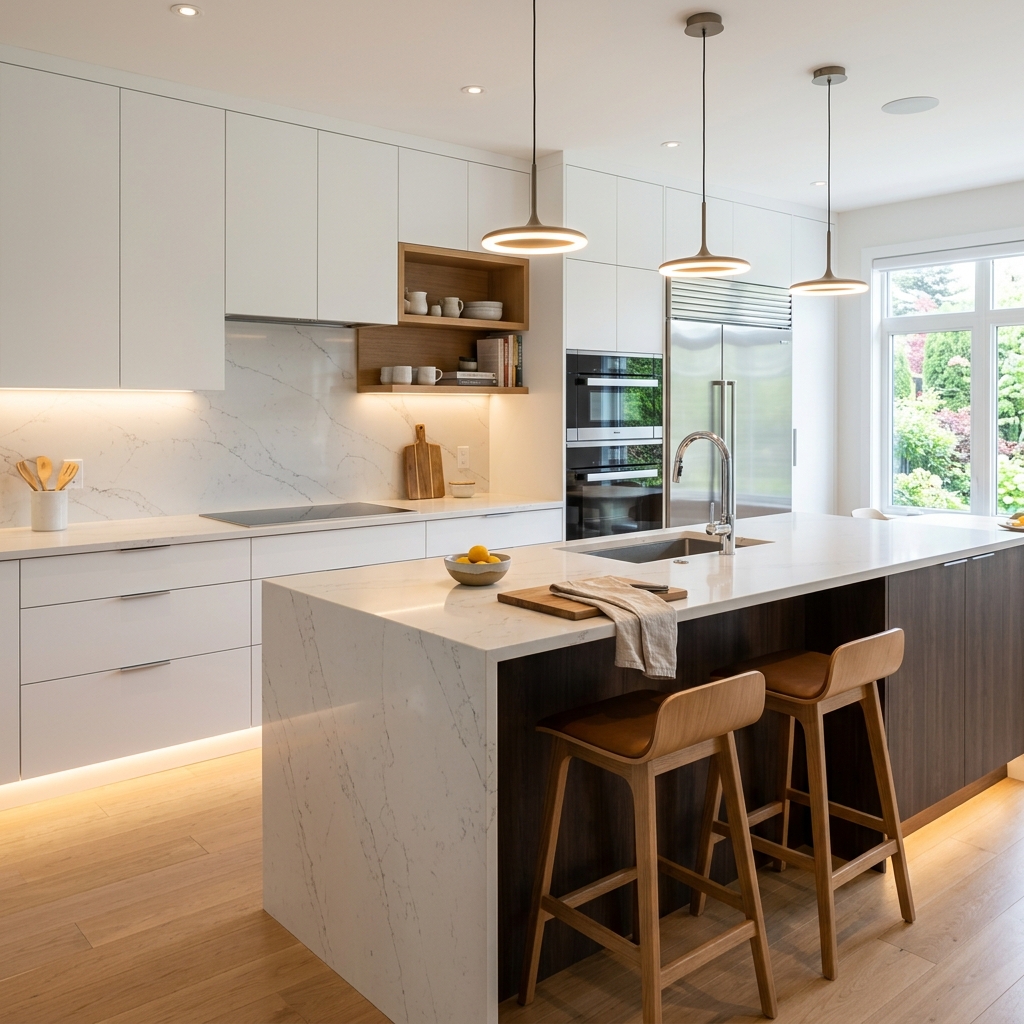
This level of renovation involves completely gutting the space and often removing walls to create an open-concept living area. It features:
- Fully custom cabinetry with integrated organizers and high-end hardware.
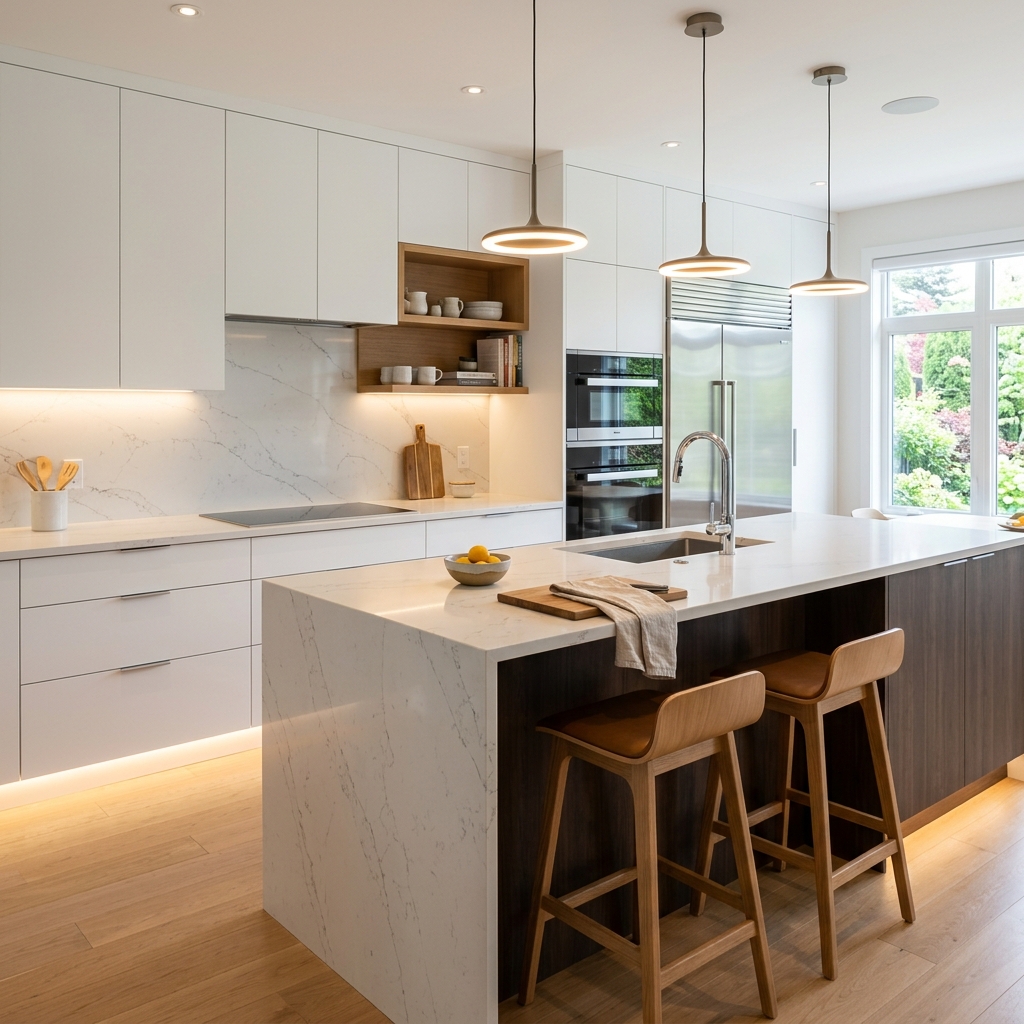
- Premium natural stone countertops (marble, quartzite, or soapstone).
- Commercial-grade built-in appliances (such as Sub-Zero or Wolf).
- Under-cabinet task lighting, recessed ceiling cans, and luxury pendant fixtures.
- Substantial layout changes requiring structural engineering, floor leveling, and permits.
Below is an itemized breakdown of the average cost allocations across these three project tiers:
| Component | Budget ($8K - $15K) | Mid-Range ($18K - $35K) | Luxury ($45K - $80K+) |
|---|---|---|---|
| Cabinetry & Hardware | $2,500 - $4,500 | $6,000 - $11,000 | $15,000 - $25,000+ |
| Labor & Installation | $1,500 - $3,000 | $4,500 - $8,000 | $10,000 - $18,000+ |
| Appliances | $2,000 - $3,500 | $3,500 - $7,000 | $10,000 - $18,000 |
| Countertops | $1,000 - $1,800 | $2,500 - $4,500 | $6,000 - $10,000+ |
| Plumbing & Electrical | $500 - $1,200 | $2,000 - $4,000 | $5,000 - $9,000 |
| Backsplash & Flooring | $800 - $1,500 | $1,800 - $3,500 | $4,000 - $8,000 |
| Design, Permits & Admin | DIY / $200 | $1,000 - $2,000 | $3,000 - $6,000 |
📐 The Golden Rule: The Kitchen Work Triangle
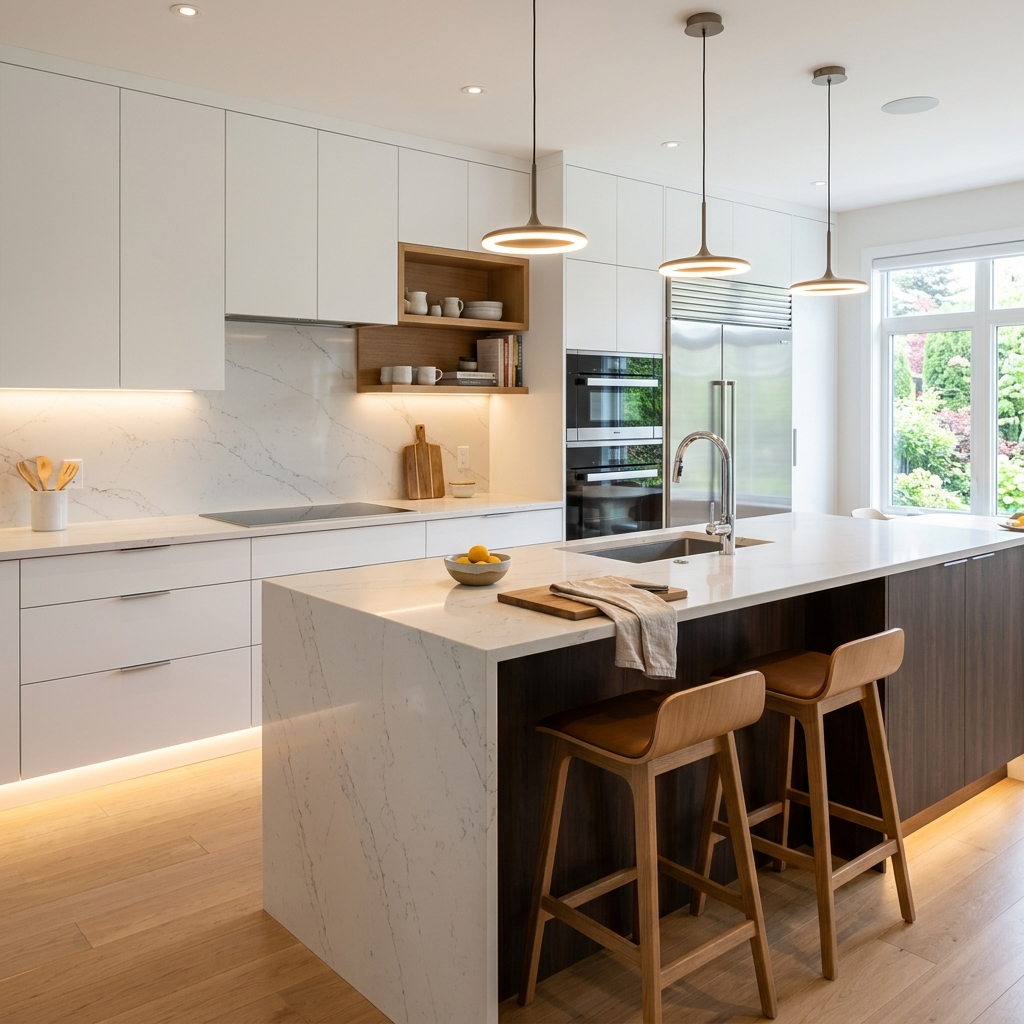
Efficient kitchen design relies on the concept of the Kitchen Work Triangle. First developed in the 1940s, this design principle connects the three primary work areas of the kitchen to optimize efficiency and minimize unnecessary movement:
- The Refrigerator (Food Storage Center).
- The Sink (Food Preparation and Cleaning Center).
- The Cooktop / Oven (Cooking Center).
To ensure a smooth and functional workflow:
- The distance between any two of these centers should be between 4 and 9 feet (1.2 to 2.7 meters).
- The sum of all three sides of the triangle should be between 12 and 26 feet (3.6 to 8.0 meters).
- No major traffic paths should cross through the triangle.
- No tall cabinets, islands, or household obstacles should intersect the lines of the triangle.
If your kitchen layout violates this rule—for example, if the refrigerator is placed too far from the sink—you will find cooking and cleaning tedious.
🛠️ Cabinet Selection: Stock vs. Semi-Custom vs. Custom
Cabinetry is the single largest expense in a kitchen remodel, typically accounting for 30% to 35% of the total budget. Understanding your options is key to controlling costs:
- Stock Cabinets: These are mass-produced in standard sizes (usually in 3-inch increments) and are available off-the-shelf at home improvement stores. They are cost-effective and have quick lead times, but offer limited styles and cannot be adjusted to fit non-standard spaces.
- Semi-Custom Cabinets: These are built-to-order but from a set of pre-designed door styles and materials. You can make custom alterations, such as changing drawer depths or adding built-in wine racks. They represent the best balance of quality, customization, and cost for mid-range remodels.
- Custom Cabinets: Handcrafted to fit your exact kitchen dimensions. They offer unlimited choice of wood species, colors, finishes, and storage configurations. Custom cabinets are built to last a lifetime but have long lead times (8 to 12 weeks) and high price tags.
💡 Smart Ways to Reduce Kitchen Remodel Costs
If you want a beautiful new kitchen but need to stay within a tight budget, try implementing these expert strategies:
- Reface or Paint Cabinets: If your cabinet boxes are structurally sound, don't replace them! Sanding and painting them or replacing just the front doors and drawer faces (refacing) can save you up to $5,000 – $10,000 compared to buying new cabinetry.
- Opt for Laminate or Wood Countertops: Quartz and granite are premium choices, but high-quality laminate or butcher block countertops are durable, look great, and cost a fraction of the price.
- Plan Materials Precisely: Avoid buying too much material. Measure your floor, walls, and backsplash area, and use our free interactive estimator tool to calculate exactly how much flooring, tile adhesive, grout, and paint you need.
❓ Frequently Asked Questions (FAQ)
How long does a kitchen remodel take?
A cosmetic kitchen refresh can take 2 to 3 weeks. A standard mid-range remodel typically takes 4 to 6 weeks. A major luxury gut-renovation involving layout changes, structural alterations, and inspections can take 8 to 12 weeks. Always set up a temporary kitchen area in your house (with a microwave, toaster, and mini-fridge) before construction begins.
Should I choose Quartz or Granite countertops?
Both are highly durable. Quartz is an engineered stone that is non-porous, meaning it does not require sealing and is highly resistant to stains and bacteria. Granite is a natural stone that offers unique, organic veining, but it is porous and must be sealed once a year to prevent staining. In 2026, Quartz remains the more popular choice for busy family kitchens due to its low maintenance.
What is the correct order of a kitchen remodel?
- Demolition and structural changes (e.g., removing walls).
- Plumbing and electrical rough-ins.
- Drywall repair and wall preparation.
- Flooring installation.
- Cabinet installation.
- Countertop template measuring and installation.
- Tile backsplash installation.
- Plumbing and electrical trim out (sinks, faucets, lighting).
- Appliance installation.
- Final painting and touch-ups.
How does a kitchen remodel affect home resale value?
A well-executed kitchen remodel is one of the best ways to boost home value. Prospective home buyers pay close attention to the kitchen. Even if you do not recover 100% of the cost immediately, an updated kitchen makes a home significantly easier to sell in competitive real estate markets.