How Much Paint Do I Need? Complete Calculation Guide
How Much Paint Do I Need? Complete Calculation Guide
One of the most common questions during a home remodeling project is: "How much paint do I need to buy?" It seems like a simple question, but getting it wrong can lead to frustration and extra costs. Buying too little paint means making extra trips to the store, and you run the risk of batch-color differences. Buying too much paint wastes money and leaves you with paint cans cluttering your basement or garage, which eventually dry out and require hazardous waste disposal.
In this comprehensive guide, we walk you through the step-by-step mathematical formulas to calculate the exact amount of paint and primer required for any room. We also cover the impact of wall textures, outline how to estimate paint for trim and ceilings, and offer professional tips for achieving a flawless finish.
📐 Step 1: Calculate Gross Wall and Ceiling Area
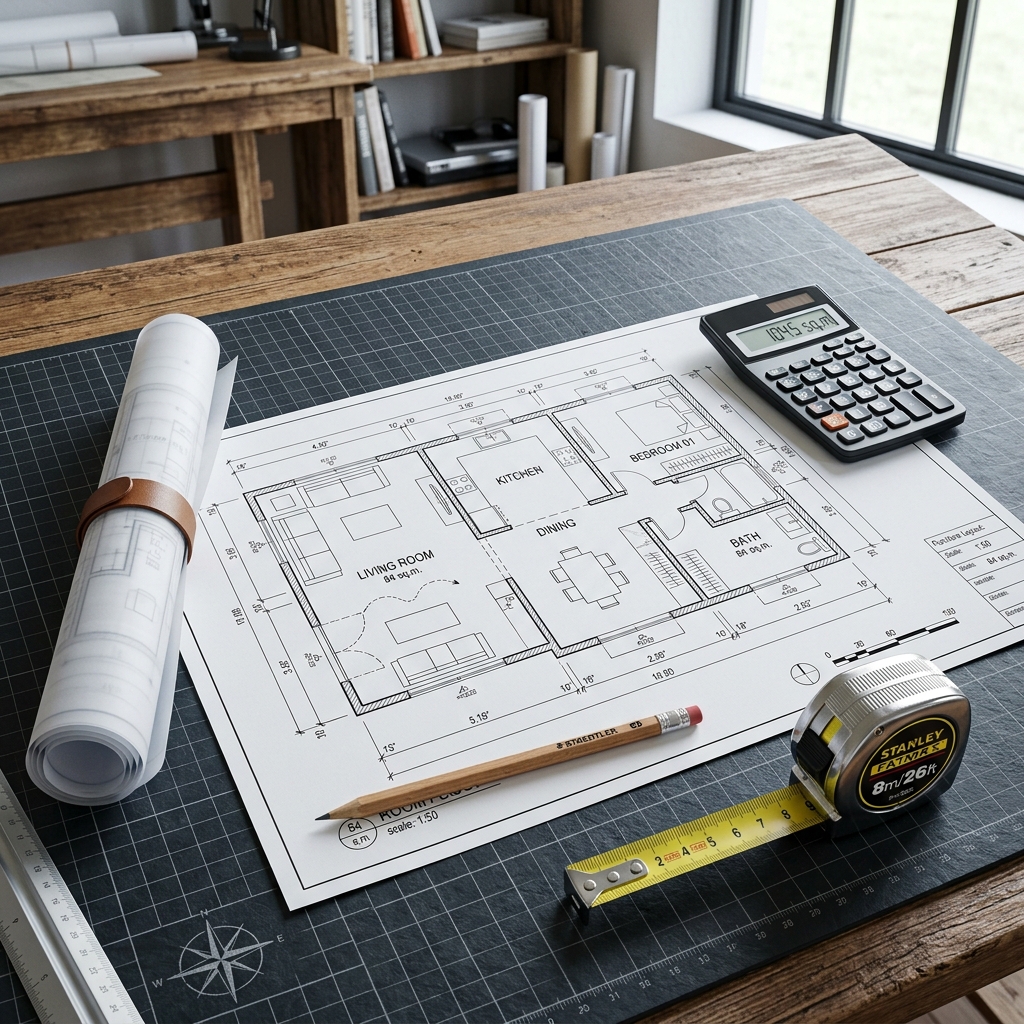
To find your gross wall area, you must measure the physical dimensions of your room. You will need a tape measure and a notepad. First, determine the perimeter of the room by measuring the length of all the walls and adding them together. Then, measure the height of the walls from the floor to the ceiling.
Formula for Gross Wall Area: $$\text{Gross Wall Area} = \text{Room Perimeter} \times \text{Room Height}$$
Let's look at a concrete example. Consider a standard bedroom that is 14 feet wide and 12 feet long, with a ceiling height of 8.5 feet:
- Perimeter: $$14 + 12 + 14 + 12 = 52\text{ feet}$$
- Gross Wall Area: $$52\text{ feet} \times 8.5\text{ feet} = 442\text{ square feet}$$
If you also plan to paint the ceiling, you must calculate the ceiling area separately.
Formula for Ceiling Area: $$\text{Ceiling Area} = \text{Room Length} \times \text{Room Width}$$ For our example room, the ceiling area is: $$14\text{ feet} \times 12\text{ feet} = 168\text{ square feet}$$
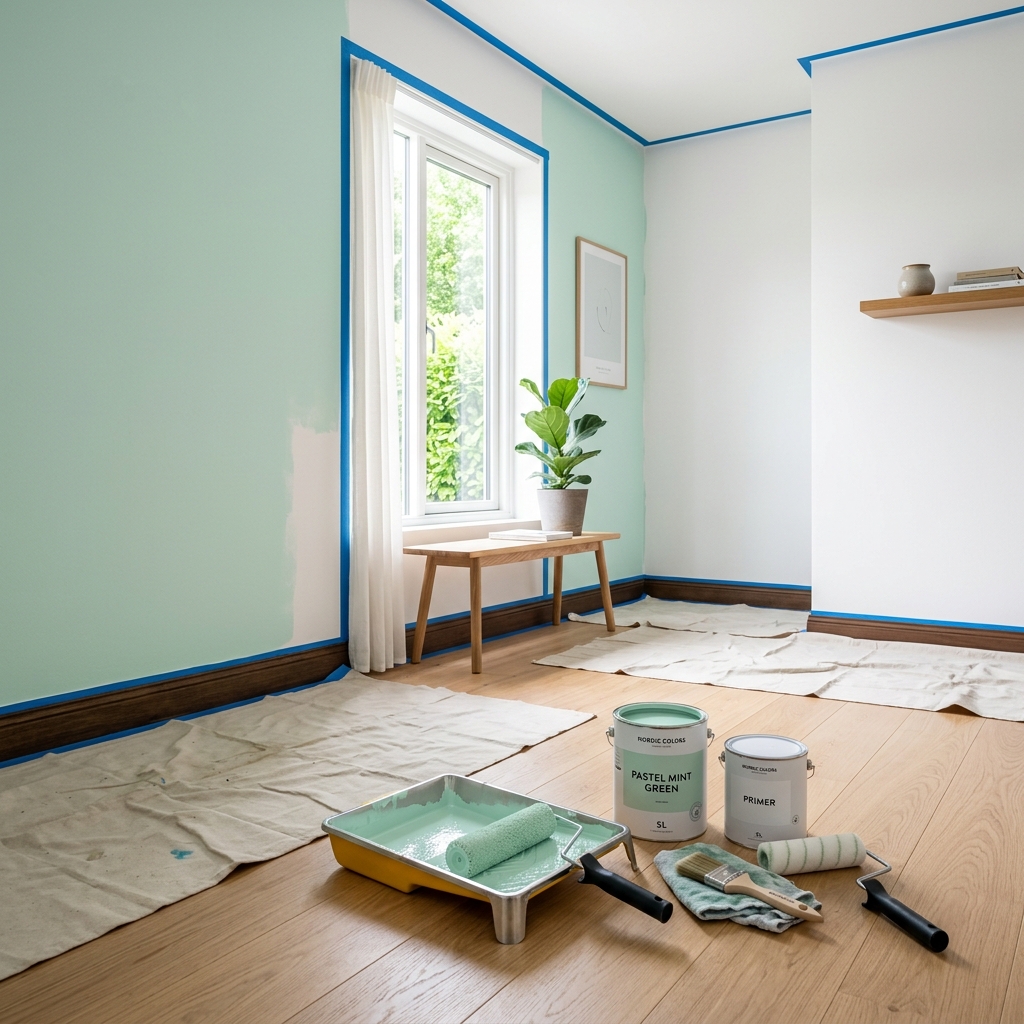
🚪 Step 2: Deduct Openings (Doors & Windows)
You do not paint over doors and windows with the same wall paint, so you must subtract their surface area from your gross wall area. Deducting these openings ensures you buy only the paint you will actually apply to the walls.
Use these standard average surface areas for doors and windows if you cannot measure them individually:
- Standard Interior Door: 3 feet wide by 6.8 feet high = 20 square feet (approx. 1.8 square meters)
- Standard Window: 3 feet wide by 5 feet high = 15 square feet (approx. 1.4 square meters)
Let's assume our example room contains one standard door and two standard windows: $$\text{Total Deductions} = \text{Door Area} + \text{Window Area}$$ $$\text{Total Deductions} = 20\text{ sq ft} + (2 \times 15\text{ sq ft}) = 50\text{ square feet}$$
Subtract this value from your gross wall area to find your net wall area: $$\text{Net Wall Area} = \text{Gross Wall Area} - \text{Total Deductions}$$ $$\text{Net Wall Area} = 442\text{ sq ft} - 50\text{ sq ft} = 392\text{ square feet}$$
🎨 Step 3: Factor in Coats and Paint Coverage Rate
Most painting projects require two coats of paint to achieve uniform color depth and hide the underlying drywall texture or color. If you are painting a dark color over a light wall (or vice versa), you might even need three coats.
Paint coverage rates depend on the quality of the paint and the texture of your walls. On average, one gallon of high-quality paint covers between 350 and 400 square feet (approximately 10 to 12 square meters per liter) on a smooth, primed surface.
Formula for Paint Volume: $$\text{Paint Needed (gallons)} = \frac{\text{Net Wall Area} \times \text{Number of Coats}}{\text{Paint Coverage Rate}}$$
Using a conservative coverage rate of 350 square feet per gallon for our 392 sq ft net wall area: $$\text{Paint Needed} = \frac{392 \times 2}{350} = 2.24\text{ gallons}$$
In this case, purchasing 2 gallons will leave you slightly short. You should purchase 2 gallons and 1 quart of paint, or round up to 3 gallons to ensure you have enough for touch-ups.
| Wall Surface Type | Expected Paint Coverage | Notes / Key Considerations |
|---|---|---|
| Smooth Drywall (Primed) | 350 - 400 sq ft per gallon | Ideal conditions; maximum coverage. |
| Textured Drywall (Orange Peel) | 300 - 330 sq ft per gallon | Textured surfaces increase surface area. |
| Unprimed New Drywall | 200 - 250 sq ft per gallon | Highly porous; sucks up paint rapidly. |
| Concrete Block / Stucco | 150 - 200 sq ft per gallon | Extremely rough and porous; requires heavy roller nap. |
🧼 Step 4: Estimate Primer Requirements
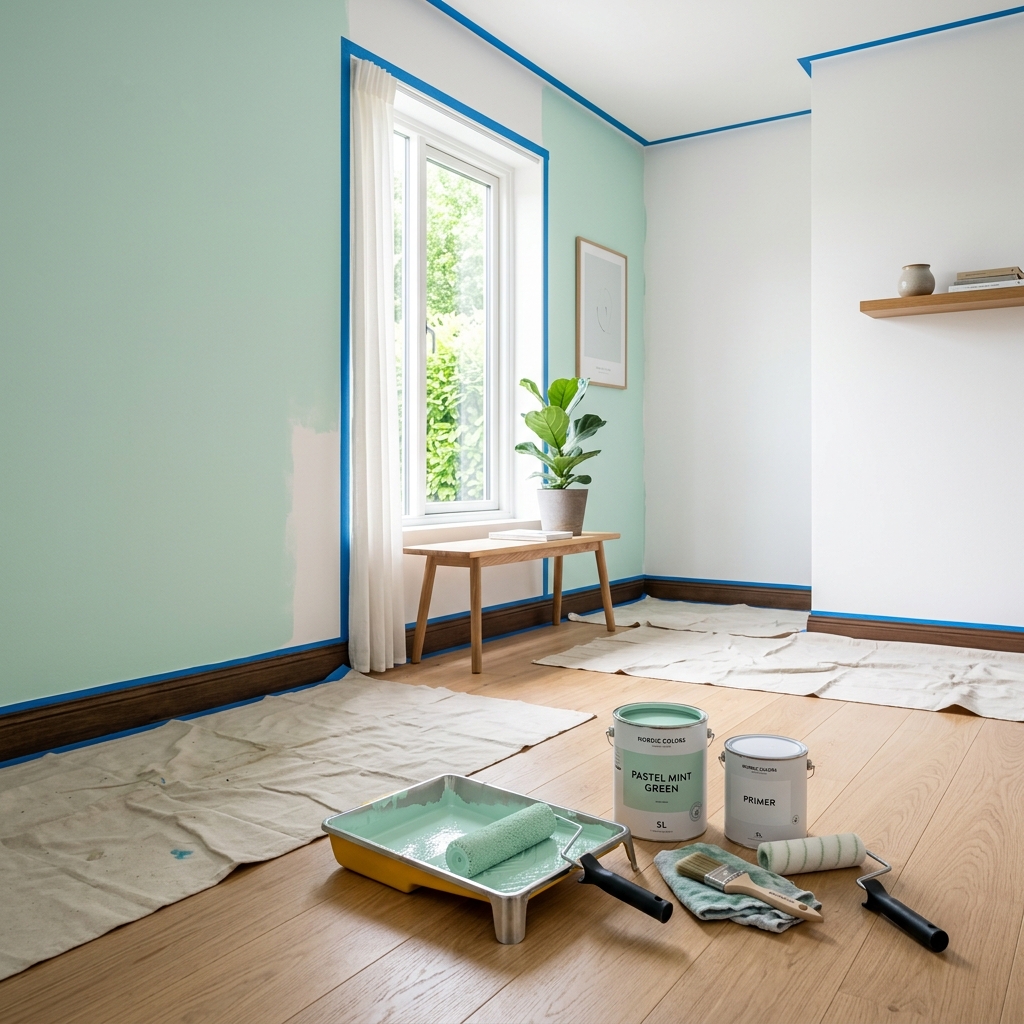
Primer is a foundational coating that seals bare drywall, repairs, or dark paint colors, providing a uniform surface for your paint to adhere to. Applying primer is highly recommended if you are:
- Painting brand-new drywall or fresh plaster patches.
- Switching paint types (e.g., applying latex/water-based paint over old oil-based paint).
- Making a drastic color transition (e.g., painting white over a dark navy blue wall).
Unlike paint, primer is typically applied in a single coat. Primer coverage is slightly higher than paint, averaging 400 square feet per gallon.
Formula for Primer Volume: $$\text{Primer Needed (gallons)} = \frac{\text{Net Wall Area}}{\text{Primer Coverage Rate}}$$ For our room: $$\text{Primer Needed} = \frac{392}{400} = 0.98\text{ gallons}$$
You should buy exactly 1 gallon of primer.
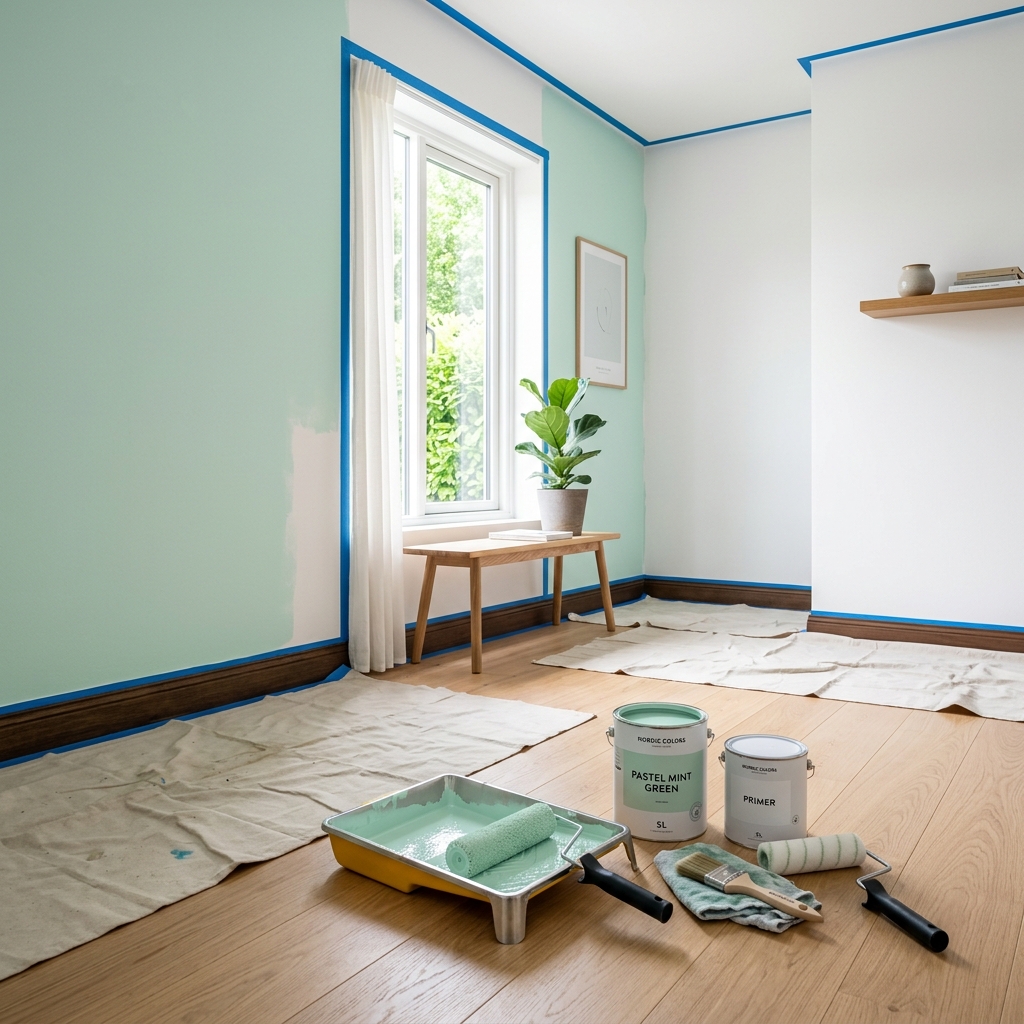
💡 How to Estimate Paint for Trim, Baseboards, and Doors
Don't forget the trim! Baseboards, door frames, and doors are usually painted with a different sheen (usually semi-gloss or satin) and color than the walls.
Use these simple rules of thumb to estimate your trim paint:
- Baseboards: Multiply the perimeter of the room by 0.5 feet (6 inches) to find the square footage. For our 52-foot perimeter room, this is 26 sq ft.
- Door Trim and Frame: Allocate 15 square feet per side of a door frame.
- Door Slab: A standard door slab requires 20 square feet per side.
- Window Trim: Allocate 10 square feet per window.
Add these areas together and divide by a standard coverage rate of 350 sq ft per gallon. Because trim paint is usually purchased in smaller projects, buying 1 quart (which covers about 90-100 sq ft) is usually sufficient for a single bedroom.
🚀 The Easiest Way: Use our Interactive 2D Room Planner
If you want to avoid manual math and the risk of calculations errors, use our free Online Wall Paint Calculator.
Simply draw your room blueprint on our interactive 2D grid, add virtual doors and windows, set your preferred coats, and our calculation engine automatically deducts openings and calculates exact paint and primer volumes instantly!
❓ Frequently Asked Questions (FAQ)
Can I skip primer if I use a "Paint & Primer in One" product?
"Paint and primer in one" products are thicker paints that work well for color transitions on previously painted, smooth surfaces. However, they do not replace dedicated primers on bare drywall, patched areas, or stained surfaces. For new construction or repairs, always use a dedicated primer first.
How long does paint take to dry between coats?
For water-based latex paint, wait at least 2 to 4 hours before applying the second coat. For oil-based paints, wait 24 hours. Applying a second coat too early can cause the first coat to pull, leading to bubbles and an uneven texture.
What paint sheen should I use in each room?
- Flat / Matte: Best for ceilings and low-traffic rooms (like guest bedrooms). Hides imperfections well but is difficult to clean.
- Eggshell: Great for living rooms and adult bedrooms. Offers a low sheen and moderate washability.
- Satin: Ideal for high-traffic areas like entryways, family rooms, and kids' bedrooms. Easy to clean.
- Semi-Gloss: Recommended for kitchens, bathrooms, trim, and doors. Highly moisture-resistant and scrubbable.
- Gloss / High-Gloss: Best for cabinets and accent trim. Extremely durable, but highlights every surface imperfection.
What should I do with leftover paint?
Keep a small jar of paint for future touch-ups. Store the remaining paint in a cool, dry place with the lid sealed tightly. To keep it airtight, place plastic wrap over the can opening before hammering the lid shut. If you must dispose of paint, check local environmental regulations—latex paint must be dried out with paint hardener or cat litter before disposal.